Roof Ventilation Essentials for Winnipeg’s Four Seasons
If you grew up in Winnipeg, you already speak fluent weather. We get sauna grade humidity in July, hoarfrost and deep freeze in January, and the wind treats each home like a piñata. That swing matters to the roof over your head. Ventilation is the quiet, unsung system that keeps a roof sane as the seasons push and pull. When it goes wrong, you do not get a polite email. You get ice dams, musty insulation, soft sheathing, and shingles that age like milk on a dashboard.
I have crawled through more Prairie attics than I care to admit. You can tell in 30 seconds who respected airflow and who tried to outmuscle physics with extra insulation or a bigger furnace. Ventilation does not shout. It does the same small job all year, balancing attic temperature and humidity so the building materials do not fall apart. Winnipeg’s climate gives it a proper workout.
Why this matters here more than most places
Our winter lows often sit below minus 25 C, and the warmups come fast. The freeze - thaw - refreeze routine wrings moisture into every gap. In summer, humidity climbs, sometimes into the 70 percent range. That much moisture will find the coldest surface it can and condense, which, in an attic, usually means the underside of roof sheathing or a metal nail head. A stained nail tip looks harmless until you realize each drop signals a tiny failure in moisture control. Multiply that by thousands.
Ventilation is not a substitute for insulation or air sealing. It is the third leg of the stool. Air moves in at the eaves, flushes the attic, and exits at the peak, carrying away water vapor and heat. In winter, that means a colder attic, which sounds wrong until you remember the goal is to keep the roof deck close to outdoor temperature so snow does not melt unevenly and form ice dams. In summer, it means reducing attic heat that cooks shingles and drives cooling costs. Winnipeg roofing crews that work year round all end up singing the same song: balance intake and exhaust, and do not forget the bathroom fans.
How attic airflow actually works
Forget gadget ads with twirling vents and miracle fans. The physics is simple. Warm air inside the attic naturally rises toward the ridge. Cooler air flows in through soffit vents to replace it, provided there is a clear path across the underside of the roof. The movement is slow and steady, powered by the stack effect and helped by wind. You do not want a gale in there, just consistent exchange.
The National Building Code of Canada, adopted in Manitoba, gives a minimum vent area equal to 1/300 of the insulated ceiling area if you have a proper vapor barrier, and 1/150 if you do not. That ratio refers to net free area, not the size of the hole in the shingles. Vent products list net free area in square inches, sometimes optimistically. You split that area roughly half intake and half exhaust. I aim for a little more intake than exhaust to prevent negative pressure that can suck conditioned air from the living space.
Here is how the math plays out in the real world. A 1,200 square foot bungalow with a simple gable roof needs about 1,200 divided by 300, which equals 4 square feet of net free area, or 576 square inches. Call it 600 square inches for a little safety. About 300 square inches at the ridge and 300 at the soffits. If your soffits are continuous aluminum panels with small perforations, that often gives you 6 to 9 square inches per linear foot. A 50 foot eave would then deliver 300 to 450 square inches, which is close. On the ridge, a continuous external baffle ridge vent might provide around 18 to 20 square inches per linear foot. With a 30 foot ridge, you get 540 to 600 square inches, which, combined with intake, keeps the ratios tidy. That is a happy attic in theory. In practice, insulation baffles clog, paint chokes old wood soffits, and snow tries to smother ridge vents in February.
The four seasons as ventilation stress tests
Winter is the main exam. Attics get peppered with frost on sheathing when warm, moist air from the house sneaks through light fixtures, unsealed top plates, attic access hatches, and around bath fan ducts. Frost looks like a glitter factory exploded. When temperatures bounce above zero, it melts and rains onto the insulation, sometimes onto the ceiling. That is how you end up with a brown ring in the bathroom after a chinook like thaw. The cure is not more vent holes. First, seal the air leaks. Then confirm you have generous, unblocked soffit intake and steady exhaust at the ridge or through box vents.
Spring puts the spotlight on water management. Meltwater creeps under shingles if ice dams formed, and clogged soffits slow the attic’s ability to dry out. Good flow matters as temperatures sit in the sloppy single digits. On roofs with insufficient intake, you can smell it on a damp day, a sweet wood smell that hints at the start of mold.
Summer punishes shingles and underlayment. An attic that peaks at 70 C will age asphalt shingles significantly faster than one that peaks at 55 to 60 C. You will not turn a dark roof into a cool roof with passive vents, but every few degrees of attic temperature reduction adds seasons to a shingle’s life and eases your air conditioner’s workload. That is not marketing, you can feel the difference when you pop the hatch at 3 p.m. In July.
Fall is prep season. Leaves migrate into soffit vents. Wasps like to claim the leeward gable vent as prime real estate. If a powered fan was added as a band aid in summer, now is when backdraft dampers stick open and let cold air pour into the attic all winter. I have replaced plenty of fans that cost more in heat loss than they saved.
Vent options that actually work in Winnipeg
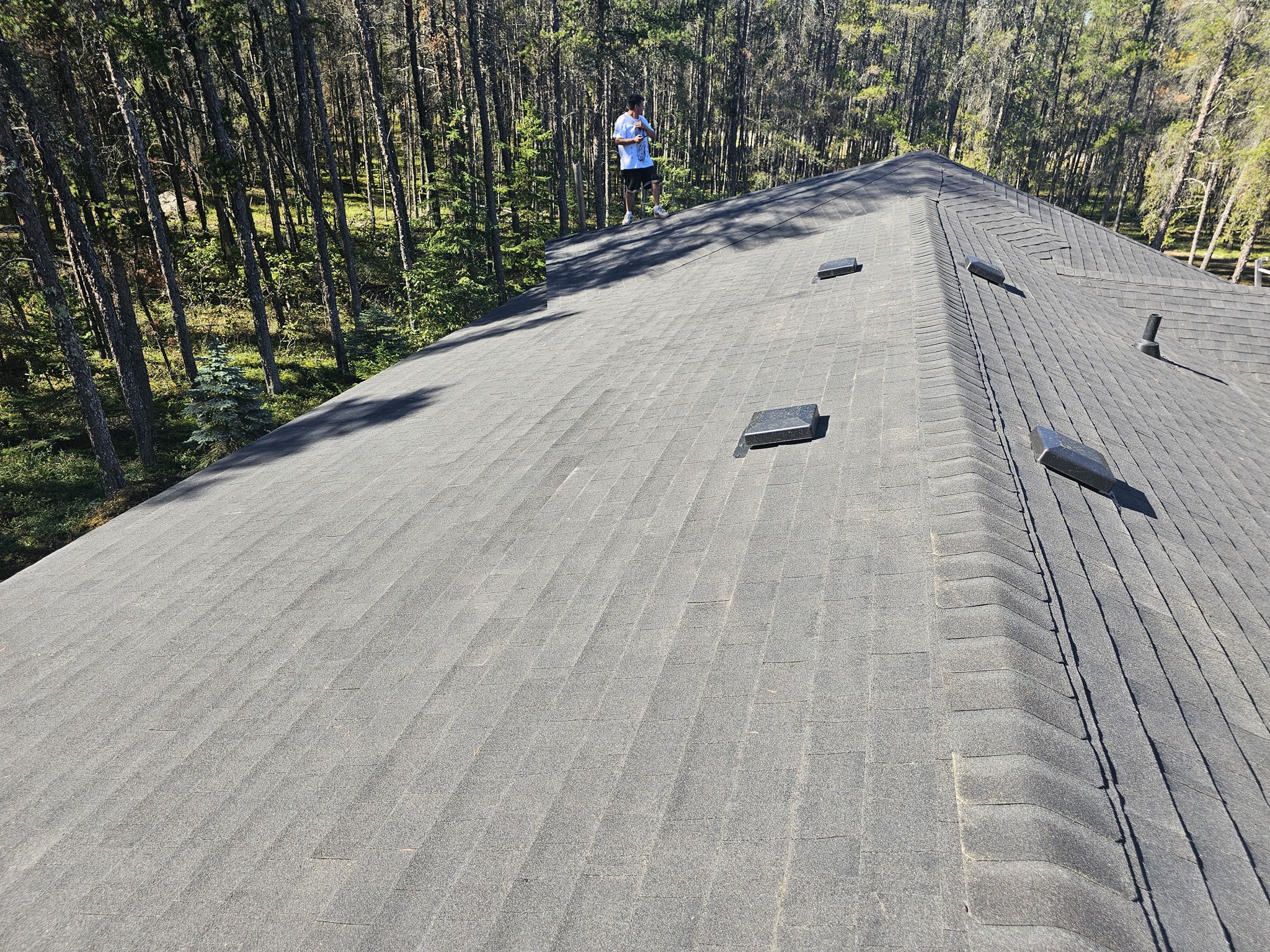
Passive systems are the backbone here. They do not break, and they play nicely with snow and wind when chosen well. Continuous ridge vents with an external baffle, paired with continuous soffit intake, create that steady, low pressure river of air you want. Box vents can work, especially on hips with short ridges, but you need enough of them and they must be placed near the upper third of the roof. Gable vents are often decorative at this point, and in our winters they can invite snow into the attic if exposed to prevailing winds. Turbines spin merrily until a January ice fog glues them in place. Powered fans have a role in hot, still climates, but in Winnipeg they can depressurize the attic and draw conditioned, moist air from the house if intake is insufficient. If you install one, size it conservatively and confirm you have more intake area than exhaust and tight air sealing below.
On metal roofs, venting is just as important, but detailing changes. Many standing seam systems use a compatible ridge vent with mesh that manages snow infiltration better than generic foam. On low slope roofs, especially those built in the 1960s and 70s, traditional attic venting struggles. These assemblies sometimes benefit more from air sealing, continuous insulation above the deck, and dedicated low slope vent products. That is not a Saturday project.
Here is a quick comparison, distilled from too many attics and a few winter rescues.
- Ridge vent with external baffle: Best for balanced, continuous exhaust. Works well with snow if you choose one rated for high wind driven rain, and it reduces hot spots. Needs continuous soffit intake and proper baffles.
- Box or static vents: Good for hips or short ridges, simple and inexpensive. Requires adequate count and placement near the peak. Can leak if under snow load or in swirling winds without proper flashing.
- Gable vents: Old homes love them for looks. As a primary system, they short circuit soffit to ridge flow and can pull snow into the attic in a blizzard. Fine as a pressure relief in mild weather if already present.
- Turbine vents: Move lots of air in wind, which we have. Can freeze or whistle. Maintenance matters, bearings do not like our winters.
- Powered attic fans: Only with abundant intake and excellent air sealing. Risk of sucking house air and creating combustion safety issues if you have natural draft appliances nearby.
What ice dams teach you about ventilation
Everyone in winnipeg roofing circles has a story about the February ice dam that turned a tidy dining room into a drip museum. Ice dams need three ingredients: heat loss from the home that warms the roof deck, snow cover to insulate against the cold air, and subfreezing eaves that refreeze meltwater. The water works upward under shingles until it hits a nail line or a vulnerable seam, then gravity does the rest.
Ventilation’s job here is not to melt the ice. It is to keep the roof deck cold enough that snow stays frozen until it can sublimate or melt harmlessly in sunshine. That only happens when your attic is nearly as cold as the outdoors and relatively dry. Add proper air sealing and generous insulation to that equation. I have seen beautifully ventilated attics still form dams because a bath fan dumped steam into the insulation like a humidifier. Fixing that meant a proper duct run to a roof cap with a backdraft damper, sealed joints, and real clamps, not tape.
Winnipeg also gets roof edges that stay in constant shade until March. Those sections need extra help. We often run ice and water shield membrane 3 to 6 feet up from the eaves during re-roofs, sometimes more depending on slope, which buys you a margin of safety. Ventilation still carries the main commercial roofing Winnipeg load. If you find thick icicles each winter on only one side of the home, suspect a blocked soffit or an attic bypass on the warmer side of the house, such as a stack of pot lights or a chimney chase.
The little details that make or break airflow
Ventilation dies quietly in the details. Soffits get stuffed with insulation during a hurried top up. Without proper baffles, loose fill settles into the overhang and strangles intake. Every rafter bay should have an air chute from soffit to attic, standoff spacers that hold insulation back from the roof deck by winnipeg roofing at least an inch. In older homes with 2 by 4 rafters, that margin is thin, which is why dense packed roof cavities in cathedral ceilings can be risky here without a vent channel created by site built spacers or proprietary foam baffles.
Vents themselves need to be the right kind. Ridge vents without an external baffle invite wind to skim over and create negative pressure that can pull snow in. Baffled designs trip the airflow so it pulls air from the attic, not the sky. Mesh screens help, but they also reduce net free area and can clog. We ask for products with net free area ratings we can verify independently, and we do not over trust packaging. A foot of ridge vent is not a foot of open area.
On the intake side, aluminum or vinyl soffit panels are only as good as what is above them. If the original wood soffit has no holes, perforated panels do nothing but look the part. I have popped out crisp new perforated soffit to find untouched plywood behind it. A shockingly common miss. Someone has to make holes in that original board. The old rule of thumb was one hole per rafter bay, 2 inches in diameter, with screen. The modern approach uses continuous vent strips or saw kerfs to open wide sections.
Air sealing and ventilation, not a rivalry
People love to argue insulation versus ventilation, as if you choose a team. The cleanest attics I see have all three: air sealing, accurate insulation, and balanced ventilation. You do not need a smoke pencil to find most leaks. If the attic hatch is not weather stripped and gasketed, there is your first draft. Around bathroom fans, you often find a neat rectangle of dirty insulation, slightly crusted from moisture. That is air moving. Every light fixture in the top floor ceiling is a potential chimney. Seal the back of the box with fire rated foam or gaskets, then bury it under insulation rated for contact with fixtures where allowed. The tops of partition walls often have gaps where drywall missed the plate. A tube of acoustical sealant and some rigid board discs fix a dozen of those in an hour.
Sealing keeps water vapor in the living space where your heat recovery ventilator can deal with it. That means your attic’s ventilation does not have to fight a flood. In winter, I look for frost near ducts. Metal duct runs without insulation sweat like a cold glass of water in August. Wrap them, seal joints with mastic, and use real clamps on flex duct ends. Short, straight runs to a roof cap minimize resistance. Humidity should exhaust outside, not into a soffit cavity where it might wander back into the attic.
A tale of two bungalows
Two North Kildonan bungalows, both built in the late 1960s, vinyl siding over original soffits, 4 in 12 roof pitch. The first had three box vents, no ridge vent, and a pair of bathroom fans both dumping into the attic. The attic insulation ranged from R-20 to R-30 in uneven waves. Winter brought inch thick ice around the eaves and a mysterious drip in April. The second had continuous soffit venting with the original wood opened up, a baffled ridge vent, well placed baffles, both bath fans vented through roof caps, and a tidy blanket of R-50 cellulose. Same storm, no drama.
We spent a day on the first house installing baffles in each rafter bay, opening the soffits, adding a ridge vent, and connecting the bath fans properly. We also air sealed the top plates and attic hatch, then topped the insulation to R-50. The next winter, the homeowner sent me a photo of clean eaves and a happy dog sunning on the deck. The fix was not exotic. It was just thorough.
Winnipeg quirks worth respecting
Our wind is not a gentle breeze. On the west side of many homes, vents see sustained, gusty pressure that can drive snow and rain at odd angles. That is why the best ridge vents here use a deflector that changes the airflow at the ridge and include a snow filter. Box vents need a feathered shingle layout and high quality flashing, or they will sit in little ponds after a sideways storm. We also get wide day to night swings in spring and fall, which amplifies condensation cycles. A good vapor barrier on the warm side of ceiling assemblies matters, not as a perfect sheet, but as a disciplined layer. Poly seams overlapped and taped, penetrations sealed, and no wild can light cutouts in the middle of a bathroom ceiling.
Critters try their best. Wasps love gable louvers. Starlings will stuff a roof cap with straw if you give them a week. Use caps with built in screens, and inspect them each fall. Keep trees trimmed back from the roof. Squirrels do not care about your net free area calculations.
Sizing and placement without guesswork
If you do not want to crawl around with a calculator, you can aim for a ratio and then validate results. On a 1,500 square foot home with a simple roof and a full length ridge, I target around 5 square feet of net free area, split evenly. That means continuous soffit venting along both sides and a ridge vent the full length. If the ridge is short, or on a hip roof with very little ridge, I add enough box vents near the top to supply the needed exhaust. A typical box vent might offer 50 square inches of net free area. If you need 300 square inches at the top and only have 150 from the ridge, that leaves 150 to make up, which means three box vents. Place them high and spaced evenly to avoid short cycling one area of the attic.
Avoid mixing strong gable vents with soffit and ridge systems. Air will take the easiest path, often from gable to gable, skipping the lower bays entirely, which leaves the soffit to ridge lanes stagnant. If a home has attractive gable vents, leave them as pressure relief or back them with solid panels that throttle their net free area so they do not dominate. The goal is air that starts low and ends high across all rafter bays.
Care and feeding, a short seasonal checklist
- Spring: Peek in the attic on a sunny day. If you see dark stains on sheathing or damp insulation, trace the source before summer bakes it dry and hides the evidence.
- Summer: Check bath and kitchen exhaust ports for flow. A paper strip should pull outward when the fan runs. If not, the damper or duct may be stuck.
- Fall: Clear soffit vents with a soft brush. Look for hornets’ nests in gable vents and under eaves. Ensure trees are trimmed back a couple of feet from the roof.
- Winter: After a heavy snowfall and a cold snap, walk the perimeter. If you see heavy icicles on one section, inspect that side’s soffit intake when it is safe.
That little routine catches 80 percent of the problems before they turn into drywall repairs.
What to ask a contractor without sounding like a seminar
You do not need to be an engineer to hold your roofer to a good standard. Ask how they calculate net free area, and whether they split intake and exhaust roughly evenly. Ask what style of ridge vent they use and whether it has an external baffle rated for high wind driven rain. If soffits are being updated, ask how they will ensure the original wood is opened up, not just hidden behind pretty perforated panels. Ask how they keep insulation from blocking soffit channels, and whether they will install baffles in every rafter bay above exterior walls.
On older homes with shallow eaves, find out how they will create intake. Sometimes that means coring holes into the frieze board and installing low profile vents. In tight cathedral sections, ask if a vent channel can be created during a re-roof by furring out above the deck before new sheathing and shingles go on. It costs more, but it can save you from chronic condensation. On any home, confirm bath fans and kitchen hoods will vent to exterior with proper roof caps, sealed joints, and insulation on metal ducts.
Costs and payback, the honest version
Ventilation work is not usually the priciest line on a re-roof, but it is never free. Continuous ridge venting and soffit work might add a few hundred to a couple thousand dollars depending on house size and how much carpentry is needed to open old soffits. Insulation baffles and air sealing supplies add a few more. Rerouting bath fans with new roof caps and insulated ducts can be a day’s work if access is tight.
You do not get a utility rebate for quiet roofs, but you do see indirect paybacks. Fewer ice dams mean fewer emergency calls and less risk of interior damage. Cooler attics help shingles last closer to their rated life, which, in our climate, often means saving several years on a roof cycle. Even a modest drop in summer attic temperature can shave a bit off cooling costs. The real return is in avoided headaches.
Edge cases and when to bend the rules
Garages and three season sunrooms live on their own island. Ventilating an unconditioned garage attic is still smart to purge car moisture, but you do not have the same vapor drive from a warm house, so the stakes differ. Standalone additions with flat roofs are tricky. Without a good vent channel, passive ventilation can underperform. In those spots, continuous exterior insulation above the roof deck and a tight interior air barrier do more heavy lifting than vents. Let your contractor show details on paper before they swing a hammer.
Homes with spray foam on the roof deck change the script. Closed cell foam applied to the underside of the roof deck can turn the attic into a conditioned space, eliminating the need for traditional venting. That approach reduces risk of condensation on the deck, but it demands excellent installation and planning for future roof work. In our market, spray foam tends to be used in tight spots or to solve specific problems, not as a blanket solution.
The Winnipeg roofing reality check
Our roofs do not enjoy a gentle coastal mist or desert predictability. They take wind, long cold snaps, fast thaws, violent hail on occasion, and a humidity roller coaster. Ventilation is the quiet partner that lets the rest of the roof assembly handle that abuse. It is not glamorous. You will not get compliments on your perfect net free area at the block party. But you will notice when the attic smells clean in February, when the shingles still have granules in year twenty, and when the eaves stay clean after the first big dump of snow.
If you are planning a re-roof, make ventilation design part of the first conversation, not an afterthought. If you are living with a mysterious stain or persistent icicles, start with a flashlight and ten quiet minutes in the attic on a cold morning. Look for frost, damp sheathing, blocked soffits, and duct leaks. Most fixes are modest and mechanical, not exotic.
I have stood in attics at minus 30 C where the air felt still and dry, like a cool museum. That is what you want. A roof that minds its own business while the weather does whatever it wants. In Winnipeg, that is the real luxury.
Canadian Crafted Roofing And Renovations
314 Bond St, Winnipeg, MB R2C 1X5
+12042217663
https://cancrafted.ca/
Facebook